
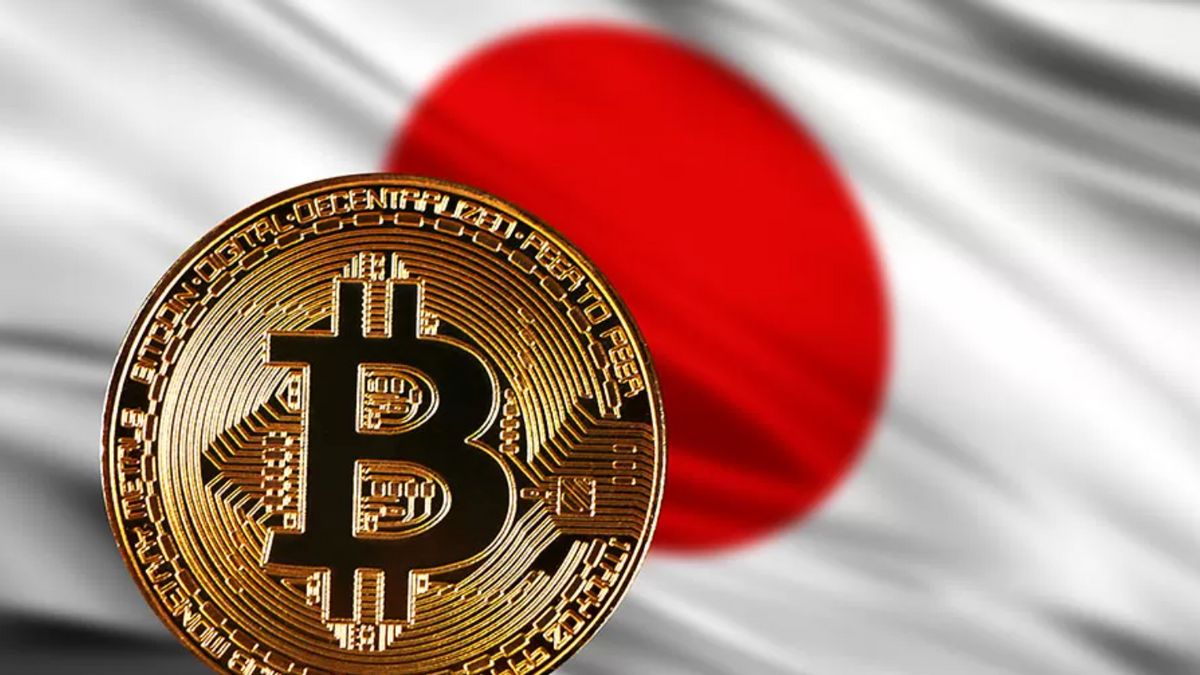
Key Takeaways Crypto reclassified from “means of settlement” to financial product under Japan’s FIEA. Tax rate on 105 approved tokens […]
The post Japan Approves Landmark Bill: Cryptocurrency Is Now an Official Financial Asset appeared first on Coindoo.
Key Takeaways
- Crypto reclassified from “means of settlement” to financial product under Japan’s FIEA.
- Tax rate on 105 approved tokens drops from up to 55% to flat 20%.
- Insider trading on crypto now prohibited – fines up to ¥10M, prison up to 10 years.
- Nomura and SBI already preparing domestic crypto ETF products.
- Banks and insurance companies may now hold crypto and register as licensed exchanges.
What Changed and Why It Matters
According to report by Nikkei, Japan’s Cabinet has approved a bill moving cryptocurrency from its previous classification as a “means of settlement” under the Payment Services Act to a formal financial product under the Financial Instruments and Exchange Act. The shift is the legal foundation for every consequential change that follows, and Japan, with 7.3 million active crypto accounts, is not a small market for those changes to land in.
The previous tax treatment applied miscellaneous income rates to crypto profits, a bracket that reached 55% for high earners. The new flat rate is 20%, applied to profits from 105 approved tokens listed on licensed Japanese exchanges. For a trader realizing ¥10 million in gains, that difference is ¥3.5 million in additional take-home. The reform is part of Japan’s “Digital Year” initiative, deliberately designed to align the country’s regulatory architecture with the EU’s MiCA framework, which matters for cross-border institutional flows and for the credibility of Japanese-listed tokens in international markets.


Full implementation of certain secondary tax regimes and ETF listings continues rolling out through early 2027.
The 105 Tokens and the Two-Tier Reality
The 20% rate does not apply universally. It applies to 105 specific tokens that meet the FSA’s criteria for transparency, technical safety, market integrity, and mandatory disclosure — and that are listed on at least three of Japan’s 30 licensed exchanges or have been on one for at least six months with association approval.
The core beneficiaries are Bitcoin, Ethereum, XRP, Solana, and a broader set of high-liquidity assets including regulated stablecoins USDC, USDT, and the newly approved yen-pegged JPYC. A further subset from the JVCEA Green List, assets already vetted for institutional use including Avalanche, Polygon, Cosmos, and Aave, also qualifies. The green list selection is telling: Japan’s institutional priority is infrastructure and DeFi protocols with established liquidity, not speculative altcoins.
Everything outside that list stays in the miscellaneous income bracket at rates up to 55%. Staking rewards, lending income, and NFTs remain there regardless of which tokens are involved. Unlisted altcoins remain there. Profits from assets traded on unlicensed international platforms, Bitget and certain Bybit configurations do not qualify, remain there. A Japanese investor choosing between an approved token on bitFlyer or SBI VC Trade at 20% and an unlisted token on an offshore platform at up to 55% faces a tax differential that dwarfs any expected return difference in normal market conditions.
The two-tier system creates a gravitational pull. The approved list becomes the rational default for most retail participants, and the insider trading prohibition makes those same tokens safer for the institutional capital that cannot legally operate in unregulated environments.

The Insider Trading Prohibition
Japan has never had crypto insider trading laws. Every exchange listing announcement, every security vulnerability disclosure, every pre-public partnership news was legally tradeable on by anyone with early access. That era ended with this bill.
Trading on non-public material information is now strictly prohibited. Violators face fines of up to ¥10 million and prison terms of up to 10 years, the same severity applied to securities insider trading in traditional markets. The criminal penalty changes the behavior of everyone in Japan with access to pre-announcement information at exchanges, development teams, or regulatory bodies. The information asymmetry that has been a structural feature of Japanese crypto markets since their inception has a legal ceiling on it for the first time.
That ceiling is what makes the market safe enough for institutional capital to enter at scale. Nomura and SBI are not preparing ETF products for a market where front-running listing announcements is legal. They are preparing them for the market this bill creates.
The Institutional Pathway
There were rumors that SBI already is preparing domestic crypto ETF products which was the most forward-looking signal in the dataset although they denied it.
Banks and insurance companies may additionally hold crypto assets for investment purposes and register as licensed exchanges, opening a distribution channel that makes SBI VC Trade’s current model, with free yen deposits and withdrawals and negative maker fees, look like the preview of what mainstream banking crypto integration looks like in Japan. GMO Coin, a subsidiary of the GMO Group with deep integration into traditional financial services, is positioned similarly.
What Licensed Exchanges Look Like Now
Japan’s 30 FSA-licensed exchanges are the only venues where the 20% rate applies. The fee structures across those platforms vary significantly and the differences matter more now that the tax environment makes staying on licensed platforms financially rational.
bitbank offers negative maker fees of -0.02%, meaning liquidity providers earn a rebate, with taker fees at 0.12%. GMO Coin runs -0.01% to -0.03% maker and 0.05% to 0.09% taker with zero fees on most crypto deposits and withdrawals. SBI VC Trade matches that competitiveness at -0.01% maker and 0.05% taker with completely free yen deposits and withdrawals. These three platforms represent the lowest friction entry point into the 20% tax regime for active traders.
According to Godex, Binance Japan operates at 0.1% for both makers and takers, reducible to 0.075% with BNB fee payments, under its domestic license following the acquisition of Sakura Exchange BitCoin. Coincheck offers 0.00% maker fees with 0.10% taker fees on board trading, making it competitive for limit order users. bitFlyer’s Lightning platform starts at approximately 0.10% to 0.15% for lower volumes, while its Marketplace feature advertises zero transaction fees but hides a 2% to 10% spread that makes it significantly more expensive in practice. Kraken Japan is the most expensive entry point for retail at up to 1% plus spread on instant purchases, though its Pro tier begins at 0.25% maker and 0.40% taker for higher-volume users.
The practical implication: traders using market orders on instant-buy interfaces are paying spreads that can exceed the annual tax saving on small positions. The reform’s financial benefit is fully realized only on board trading platforms with limit orders, where the negative maker fees at bitbank, GMO Coin, and SBI VC Trade mean the exchange pays the trader to provide liquidity.
The information provided in this article is for educational purposes only and does not constitute financial, investment, or trading advice. Coindoo.com does not endorse or recommend any specific investment strategy or cryptocurrency. Always conduct your own research and consult with a licensed financial advisor before making any investment decisions.
The post Japan Approves Landmark Bill: Cryptocurrency Is Now an Official Financial Asset appeared first on Coindoo.
Source: https://coindoo.com/japan-approves-landmark-bill-cryptocurrency-is-now-an-official-financial-asset/


More Crypto News
Check our Market Overview
Disclaimer: This article is for informational purposes only and does not constitute financial advice. Always conduct your own research (DYOR).