

Key Takeaways The $2.5B Ethereum USDT burn was the largest since February. Binance’s Tron-based USDT reserve fell to about $806M. […]
The post Stablecoin Supply Tightens as Tether Burns $2.5B USDT appeared first on Coindoo.
Key Takeaways
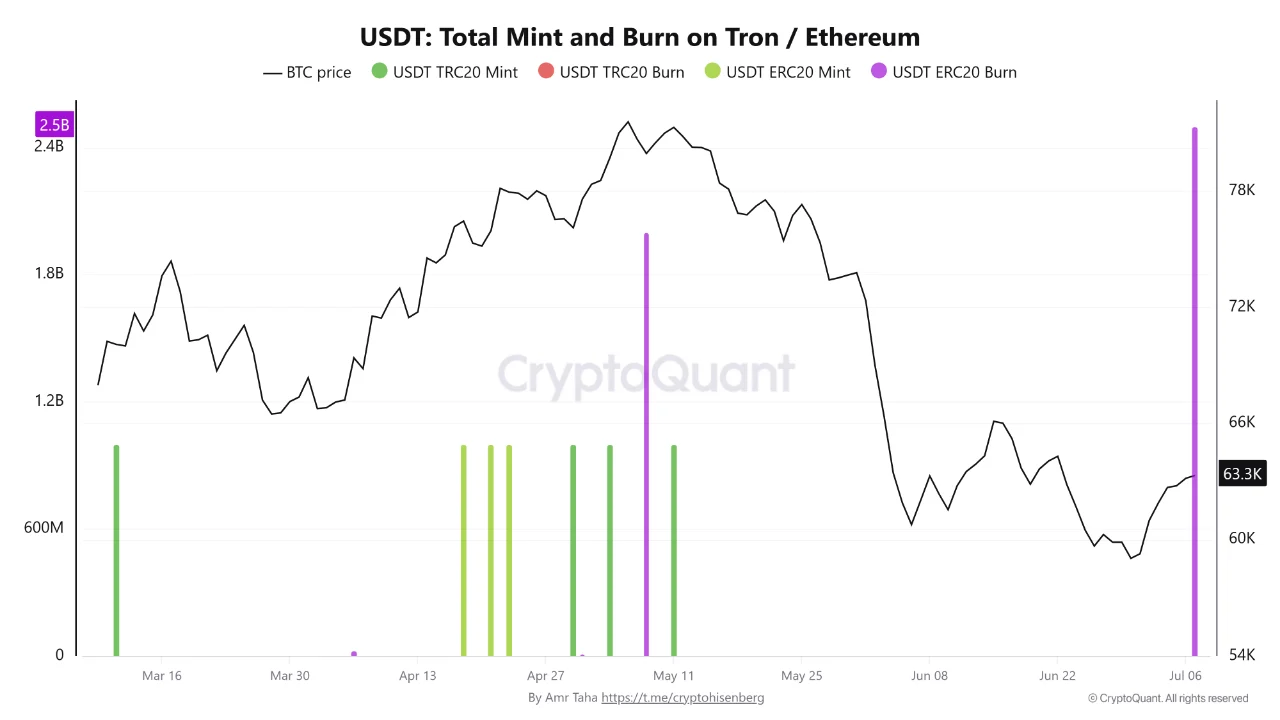
- The $2.5B Ethereum USDT burn was the largest since February.
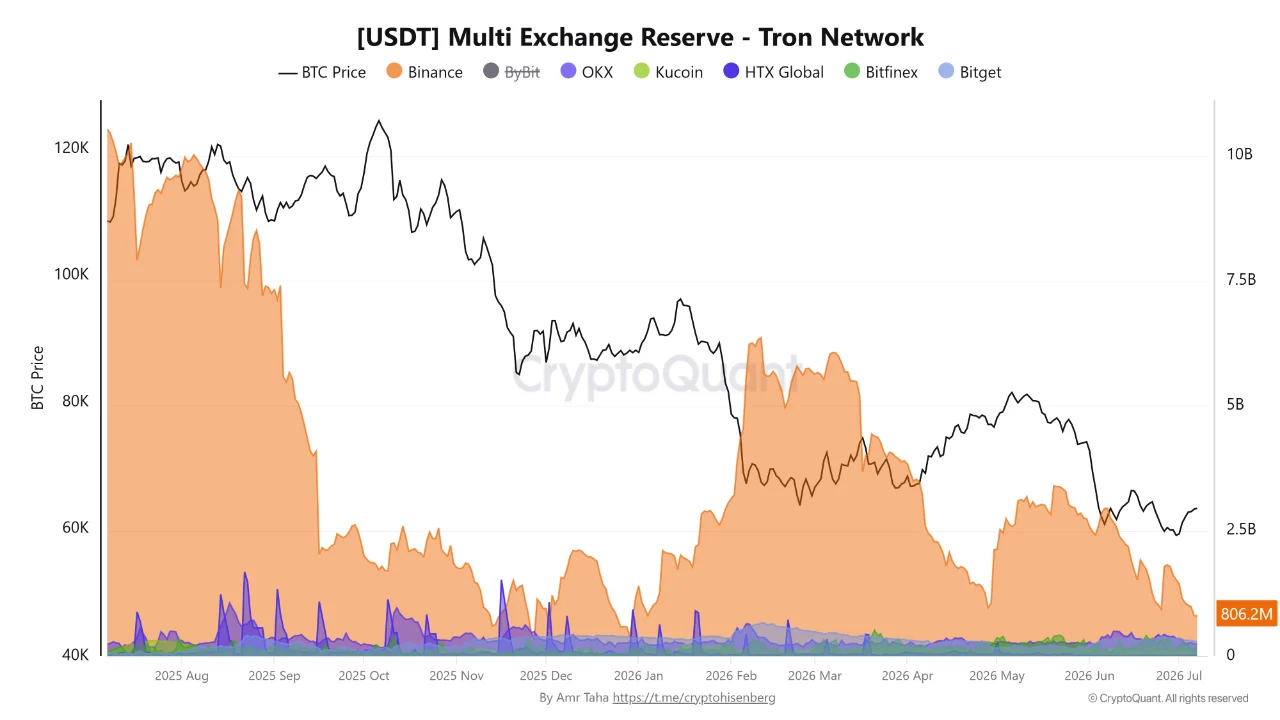
- Binance’s Tron-based USDT reserve fell to about $806M.
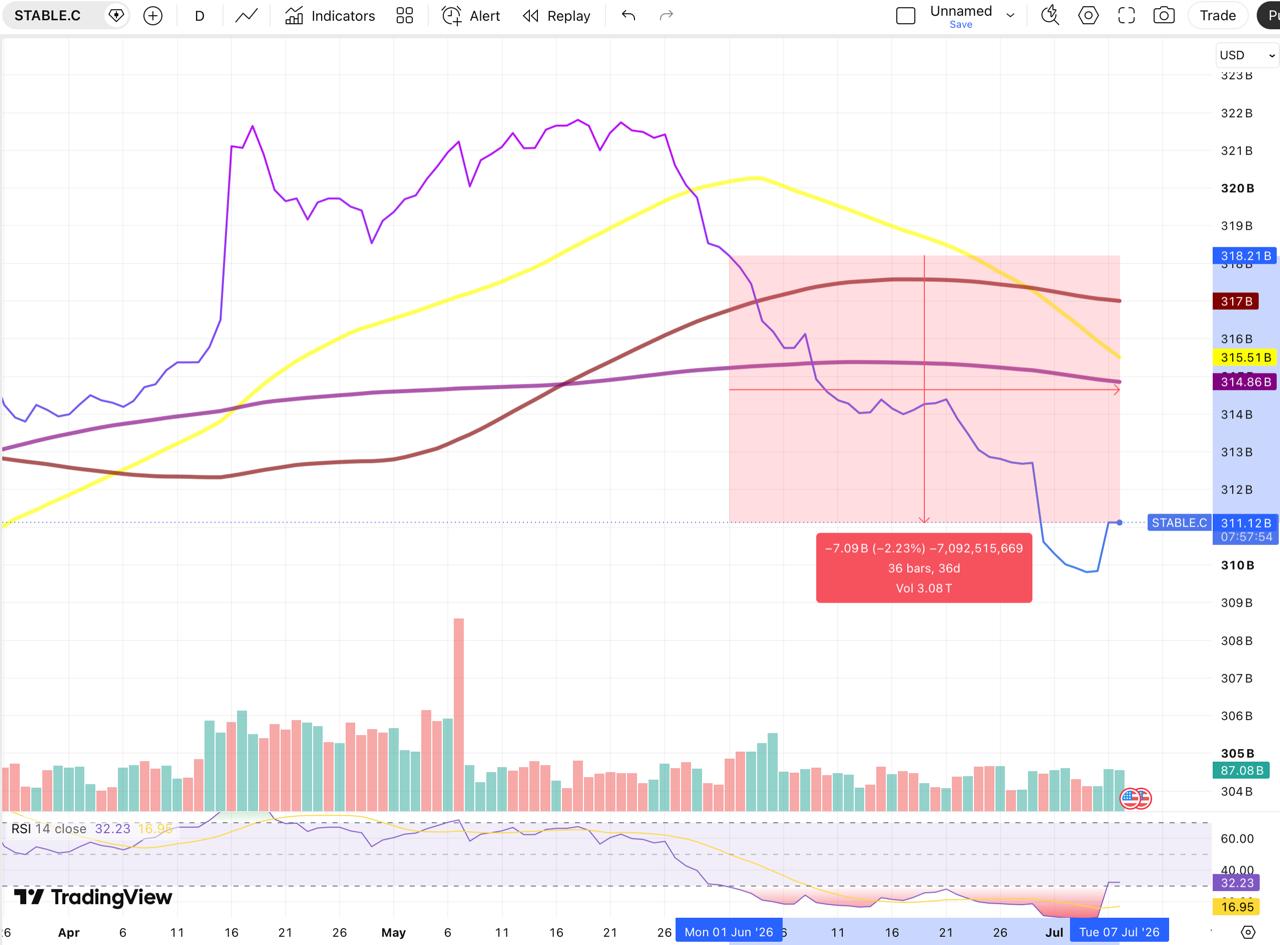
- Total stablecoin market cap declined by roughly $7.09B over 36 days.
- The data points to tighter transfer liquidity, not automatic market selling.
The Signal Is Bigger Than One Burn
A large Tether burn can reflect redemptions, treasury management, or cross-chain rebalancing. On its own, it is not enough to call the move bearish. The important part is the timing: the burn came while aggregate stablecoin supply was falling and Binance’s Tron-based USDT liquidity was also shrinking.
That combination makes the latest adjustment more relevant for market structure. Ethereum supply was reduced, Binance’s Tron reserve moved below a key threshold, and the broader stablecoin market cap continued to lose value. Together, they show a tighter liquidity backdrop rather than a single isolated treasury transaction.
What the Stablecoin Data Shows
According to CryptoQuant data, the July 7 burn was the largest Ethereum-based USDT burn since February 10, when Tether Treasury burned $3.5 billion USDT. It also exceeded the $2 billion burn recorded on May 8.


Total stablecoin market capitalization fell from roughly $318.21 billion to $311.12 billion, a drop of about $7.09 billion, or 2.23%, over 36 days. The RSI on the stablecoin market cap chart is near 32, showing weak momentum, although the reading is already close to oversold territory.
Binance’s USDT reserve on the Tron network dropped to approximately $806 million, its lowest level since December 2025. That takes the balance below the $1 billion mark and points to less USDT liquidity available through one of the market’s most used transfer channels.
Why Binance’s Tron Reserve Matters
Tron has historically been one of the main rails for USDT transfers because it is fast, cheap, and widely used by exchanges. A lower Binance reserve on Tron does not automatically mean users are leaving the market, but it does suggest thinner liquidity for moving USDT in and out of one of the largest trading venues.
That matters because exchange-side stablecoin liquidity often acts as deployable capital. When stablecoin balances expand, traders have more cash-like liquidity available to rotate into Bitcoin, Ethereum, or altcoins. When those balances contract, the market has less immediate dry powder.
The Market Read
The cleanest interpretation is liquidity compression, not direct selling pressure. The burn reduces Ethereum-based USDT supply, the Tron reserve decline points to thinner exchange transfer liquidity, and the drop in total stablecoin market cap confirms that the pressure is broader than one network.
That does not make the signal automatically bearish. Tether can mint and burn supply across chains for operational reasons, especially when liquidity shifts between Ethereum, Tron, and other networks. A single Ethereum burn does not prove that $2.5 billion has permanently exited crypto markets.
The more reliable signal is the combination. Falling aggregate stablecoin capitalization, Binance’s Tron reserve moving below $1 billion, and one of the largest Ethereum USDT burns in months all point to weaker liquidity conditions unless new minting or exchange inflows reverse the trend.
This article is for informational purposes only and does not constitute financial or investment advice. Cryptocurrency markets are highly volatile. Always conduct your own research before making investment decisions.
The post Stablecoin Supply Tightens as Tether Burns $2.5B USDT appeared first on Coindoo.
Source: https://coindoo.com/stablecoins-tighten-tether-burns-usdt/


More Crypto News
Check our Market Overview
Disclaimer: This article is for informational purposes only and does not constitute financial advice. Always conduct your own research (DYOR).