Key Takeaways Kraken now lets eligible users pledge tokenized stocks (xStocks) as collateral for leveraged crypto trades. Users can keep […]
The post Kraken Makes Tokenized Stocks Usable as Crypto Collateral appeared first on Coindoo.
Key Takeaways
- Kraken now lets eligible users pledge tokenized stocks (xStocks) as collateral for leveraged crypto trades.
- Users can keep equity exposure while unlocking trading capital, without selling.
- Kraken applies haircuts and per-asset caps, so leverage risk and liquidation remain.
The exchange now lets eligible users pledge their tokenized equities, its xStocks products, as collateral for leveraged crypto trading, turning what were passive investment tokens into assets that can unlock additional trading capital.
What Kraken Actually Changed
Until now, holding xStocks meant holding tokenized shares of companies like Apple, Nvidia, or Tesla, or ETFs such as the S&P 500, and little more. The tokens tracked the underlying equities, but they sat idle. Kraken’s update changes that. Eligible users can now pledge those tokenized shares as collateral to open futures or margin positions, without having to sell them first.
That’s a meaningful shift in what the product does. Instead of choosing between holding stock exposure and freeing up capital for crypto trades, a user can now do both at once, keeping the equity position while using its value to support crypto positions. The tokenized stock stops being a static holding and starts functioning the way collateral does across traditional financial markets.


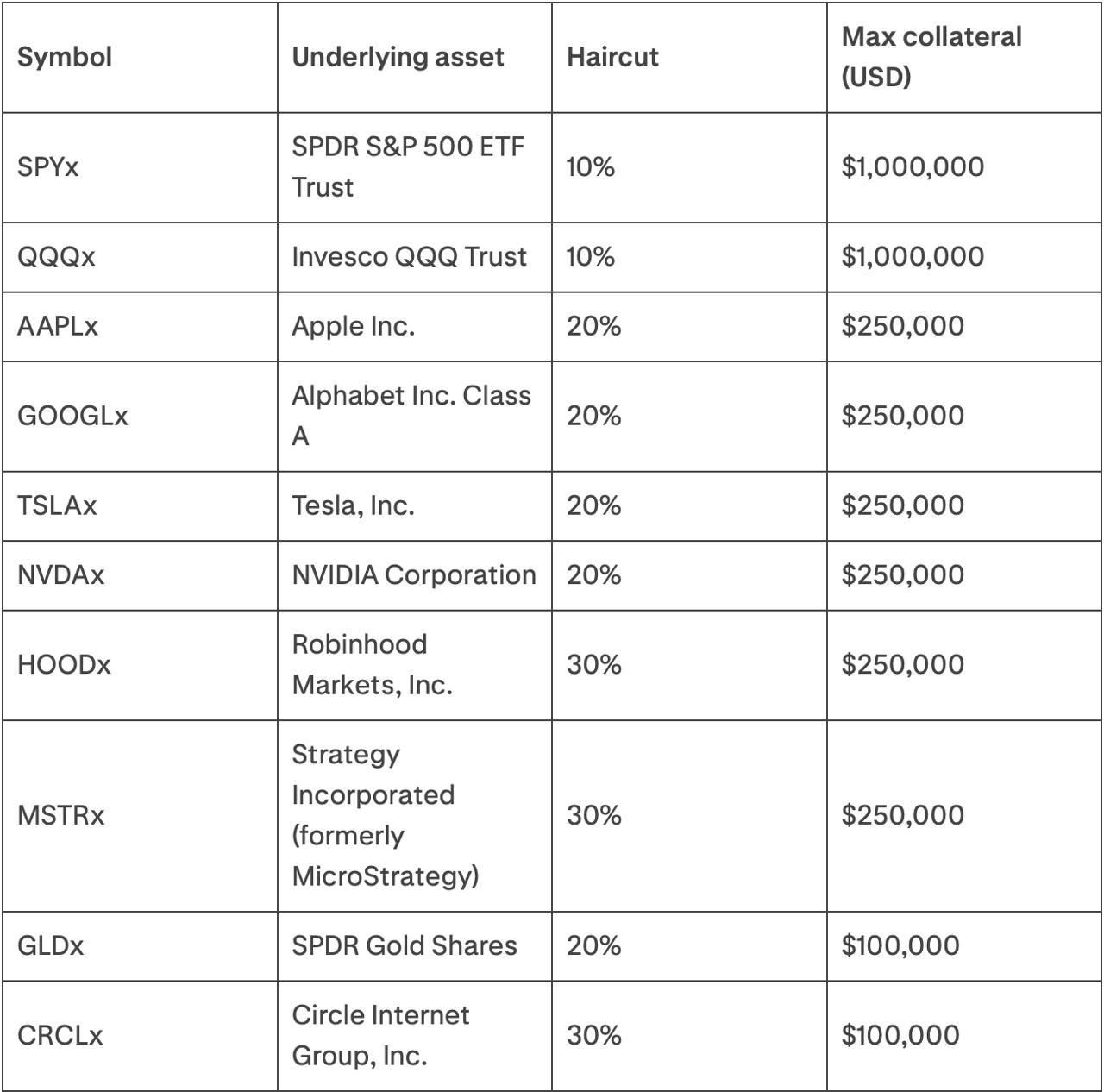
The feature is available only to eligible clients outside the United States, with regional differences depending on the product. xStocks can be used as futures collateral in the EEA and other non-U.S. markets, while margin collateral is available only outside both the United States and the EEA.
Strategic Shift Toward RWA Integration
The change is another marker in the steady convergence of traditional finance and crypto. Previously, an investor who wanted to put stock-tied capital to work in leveraged crypto trading had to liquidate that exposure. Now the same tokenized equity can serve two purposes simultaneously, maintaining traditional-asset exposure while backing crypto positions.
The bigger picture is what it signals about real-world assets, or RWAs. By giving tokenized securities practical financial utility inside a crypto exchange, Kraken strengthens the investment case for the category. Rather than existing as isolated blockchain representations of stocks, tokenized equities become integrated into crypto market infrastructure, the kind of plumbing that tends to pull more products and more adoption in behind it.
It also improves capital efficiency, which is the quieter but arguably more important effect. Investors can deploy the value of holdings they already own without selling them, which can increase trading activity and liquidity across both tokenized assets and crypto derivatives. And it signals a change in how exchanges regard these instruments: increasingly as mature financial products rather than experimental ones.
Part of a Broader Tokenization Push
Over the past several months, the tokenization of real-world assets has become one of the most active fronts in crypto, with major, established players building it into their core infrastructure. BlackRock, the world’s largest asset manager, has continued deepening its push, filing in May 2026 for new tokenized fund products and expanding its BUIDL money market fund, which has grown to roughly $2.5 billion and is increasingly used across crypto markets as collateral for borrowing and leveraged trading, the same utility Kraken is now extending to tokenized stocks. Coinbase has pursued a similar convergence of traditional and crypto markets, moving toward an “everything exchange” that blends stocks, USDC, and card spending.
The scale of the shift is now measurable: as of July 4, 2026, the total value of tokenized real-world assets, excluding stablecoins, reached $32.6 billion according to data from RWA.xyz. U.S. Treasury debt dominates at $14.83 billion, nearly half the market, followed by commodities at $4.68 billion and asset-backed credit at $2.26 billion.
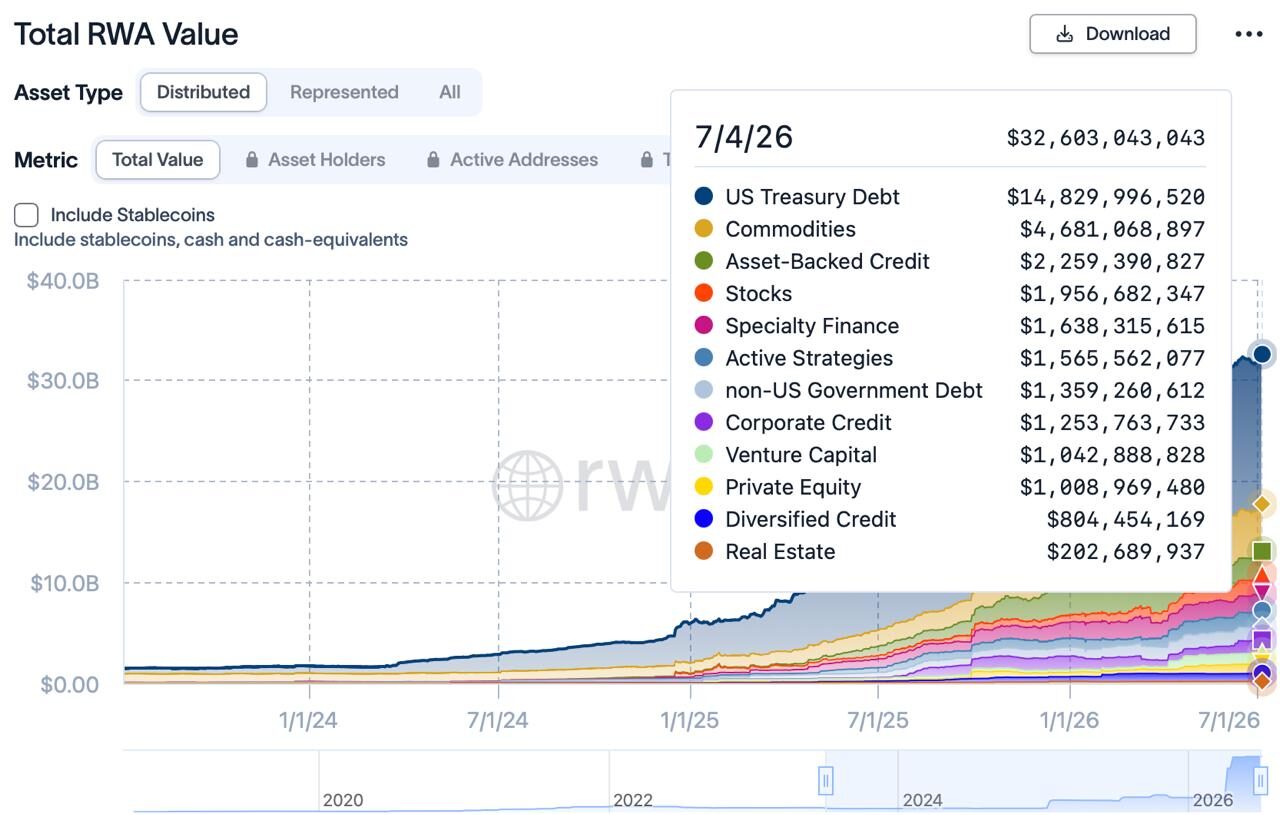
Tokenized stocks, the category Kraken’s feature builds on, have grown to $1.96 billion, with specialty finance, active strategies, non-U.S. government debt, and corporate credit each also above $1 billion. Government debt still drives the majority of on-chain RWA growth, but the spread across asset classes shows how far tokenization has expanded beyond any single use case. The throughline is consistent: tokenized versions of stocks, funds, and treasuries are being wired into real trading and settlement systems rather than sitting on the sidelines, and Kraken’s collateral feature fits squarely into that trend.
The Risks Don’t Disappear
The feature doesn’t remove the dangers that come with leverage. Kraken applies haircuts, reducing the collateral value assigned to each asset, and caps how much any single tokenized stock can count toward collateral. If the underlying stock drops, traders can face margin calls or liquidation, exactly as they would with any traditional leveraged position. Higher-volatility stocks receive larger haircuts, reflecting the greater risk they carry as collateral. In other words, the convenience of using stocks as collateral doesn’t soften the core reality that leverage amplifies losses as readily as gains.

No Inflationary Effect
One thing the update does not do is add supply. No new cryptocurrency or tokenized stock is created through the collateral mechanism; the change simply makes existing assets more capital-efficient by letting them secure additional borrowing or leveraged positions. That could increase trading volume and leverage on the platform, but it leaves the supply of cryptocurrencies and tokenized equities unchanged. The effect shows up in liquidity and market activity, not in monetary inflation.
Kraken’s move is a small mechanical change with a larger strategic message. Letting tokenized stocks serve as trading collateral pushes RWAs further from being blockchain curiosities and closer to being working parts of the financial system, usable, pledgeable, and integrated. It’s another sign that the line between holding a traditional asset and using one inside crypto markets is continuing to blur, with the same leverage risks that have always applied to margin trading coming along for the ride.
The post Kraken Makes Tokenized Stocks Usable as Crypto Collateral appeared first on Coindoo.
Source: https://coindoo.com/kraken-makes-tokenized-stocks-crypto-collateral/


More Crypto News
Check our Market Overview
Disclaimer: This article is for informational purposes only and does not constitute financial advice. Always conduct your own research (DYOR).