
Key Takeaways The Senate has roughly four weeks before its August 10 recess, but that date is a political constraint […]
The post Trump Urges Senate to Pass Clarity Act as August Recess Nears appeared first on Coindoo.
Key Takeaways
- The Senate has roughly four weeks before its August 10 recess, but that date is a political constraint rather than a formal deadline for the bill.
- Senate committees have advanced separate parts of the market-structure framework, and a unified floor version has not yet been published.
- Developer protections, ethics provisions, and the bipartisan support needed to overcome a filibuster remain unresolved.
- A July 17 House hearing and renewed public support from the White House, President Donald Trump, and Senator Cynthia Lummis increase political pressure but do not guarantee a Senate vote.
Crypto in America reported that updated Senate text could be released this week as lawmakers attempt to reconcile the separate market-structure proposals advanced by the Senate Banking and Agriculture committees.
Two Committee Proposals Still Need One Senate Bill
The House passed the Digital Asset Market Clarity Act in July 2025 by a vote of 294–134. On their side the Senate has since developed the legislation through two committees with different areas of jurisdiction.
The Senate Agriculture Committee advanced the Digital Commodity Intermediaries Act in January, focusing on the CFTC’s authority over digital commodities and the intermediaries that trade or custody them.


The Senate Banking Committee approved its version of the Clarity Act by a 15–9 vote in May, covering securities regulation, token issuance, disclosures, decentralized networks, and other areas overseen by the SEC.
The drafting process is material because differences between the committees can affect which tokens fall under each regulator, how platforms register, and what obligations apply to software developers and decentralized protocols.
If the Senate ultimately passes language that differs from the House-approved bill, the House would need to approve the revised version before it could reach the president.
What the Framework Would Change
The central objective is to replace the current case-by-case approach with statutory rules for determining when a digital asset is regulated as a security and when it falls within the CFTC’s digital-commodity jurisdiction.
The framework would also establish requirements for disclosures, market intermediaries, customer-asset protection, recordkeeping, trading oversight, and coordination between the SEC and CFTC.
For retail users, passage would not produce an immediate change to every exchange account or token. The regulators would still need to write detailed rules, establish registration processes, and determine how existing businesses transition into the new framework.
The potential practical effect is more consistent oversight of platforms holding customer funds and clearer information about which regulator is responsible when a company fails, a token issuer makes misleading claims, or a trading venue operates without adequate controls.
The legislation would not remove investment risk, guarantee that listed tokens retain their value, or prevent every platform failure.

Developer Protections and Ethics Remain Sticking Points
One unresolved issue is the treatment of developers who create or publish non-custodial software but do not control customer assets.
The Senate Banking Committee’s approved framework includes safe harbors for software developers. Supporters argue that publishing code should not automatically cause a developer to be treated as a broker, exchange, or money transmitter when the developer does not custody funds or execute transactions on behalf of users.
Opponents and law-enforcement officials have sought assurances that the protections would not prevent authorities from acting against developers who knowingly facilitate sanctions evasion, money laundering, fraud, or other illicit activity. The final wording will determine whether the provision protects neutral software development without creating a broader enforcement exemption.
Ethics rules present a separate political problem. Some senators want the legislation to restrict elected officials and their immediate families from profiting from crypto businesses or assets while influencing federal digital-asset policy.
The disagreement is linked in part to President Trump’s family crypto interests, but the broader policy question extends beyond the current administration: whether officials responsible for digital-asset legislation should be allowed to maintain direct financial exposure to the industry affected by those rules.
A floor vote also requires enough bipartisan support to overcome procedural resistance. Under normal Senate rules, invoking cloture to end debate requires three-fifths of the chamber, usually 60 votes. Committee approval therefore does not establish that the combined bill has sufficient support on the floor.
Trump and Lummis Increase Public Pressure
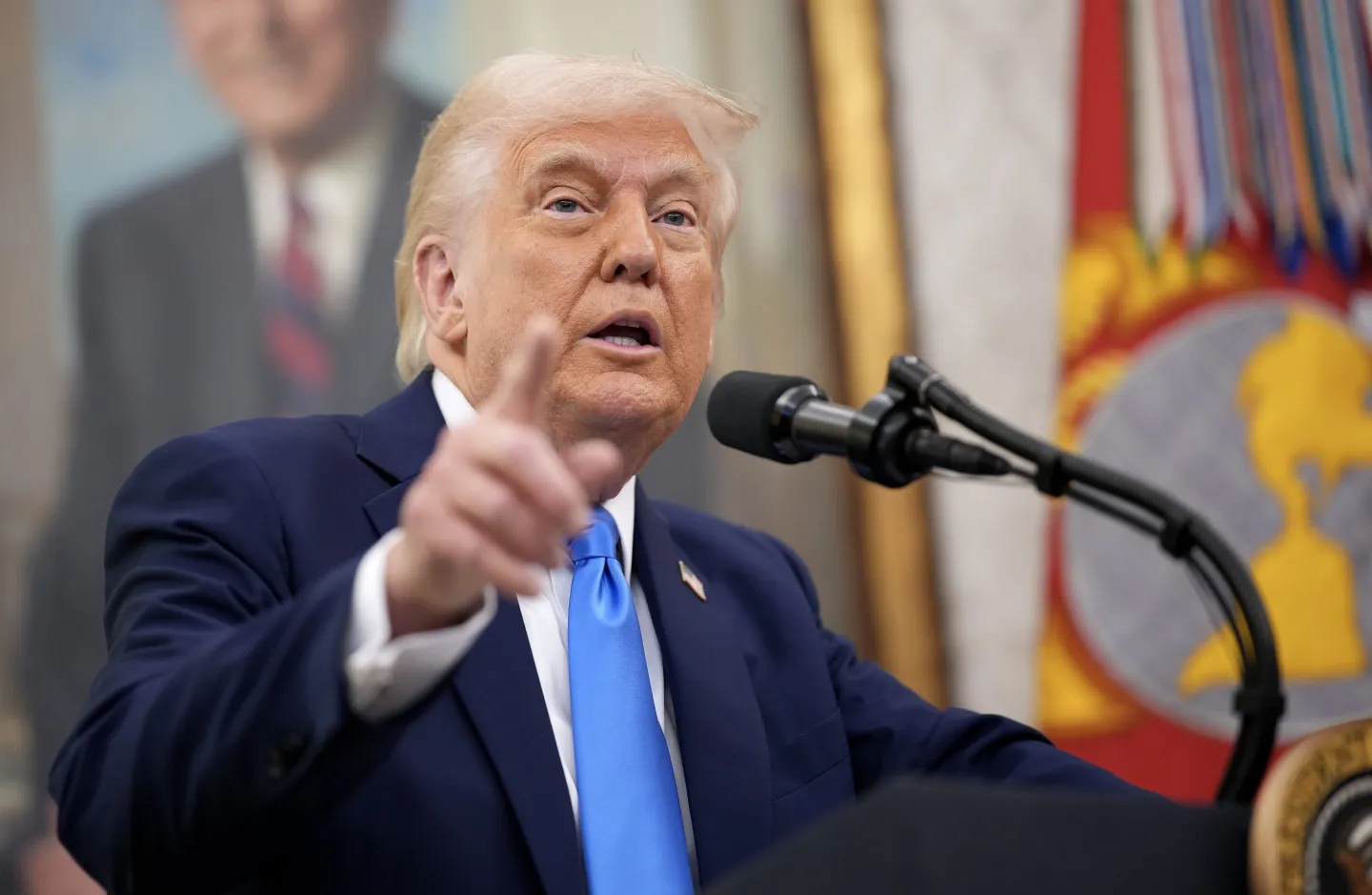
Donald Trump urged the Senate to pass the Clarity Act in a July 13 social-media post, presenting the legislation as part of the United States’ competition with China in digital assets and artificial intelligence. He made the appeal in honor of Senator Lindsey Graham, who passed away over the weekend and had advocated for continued US leadership in digital assets and other emerging technologies.
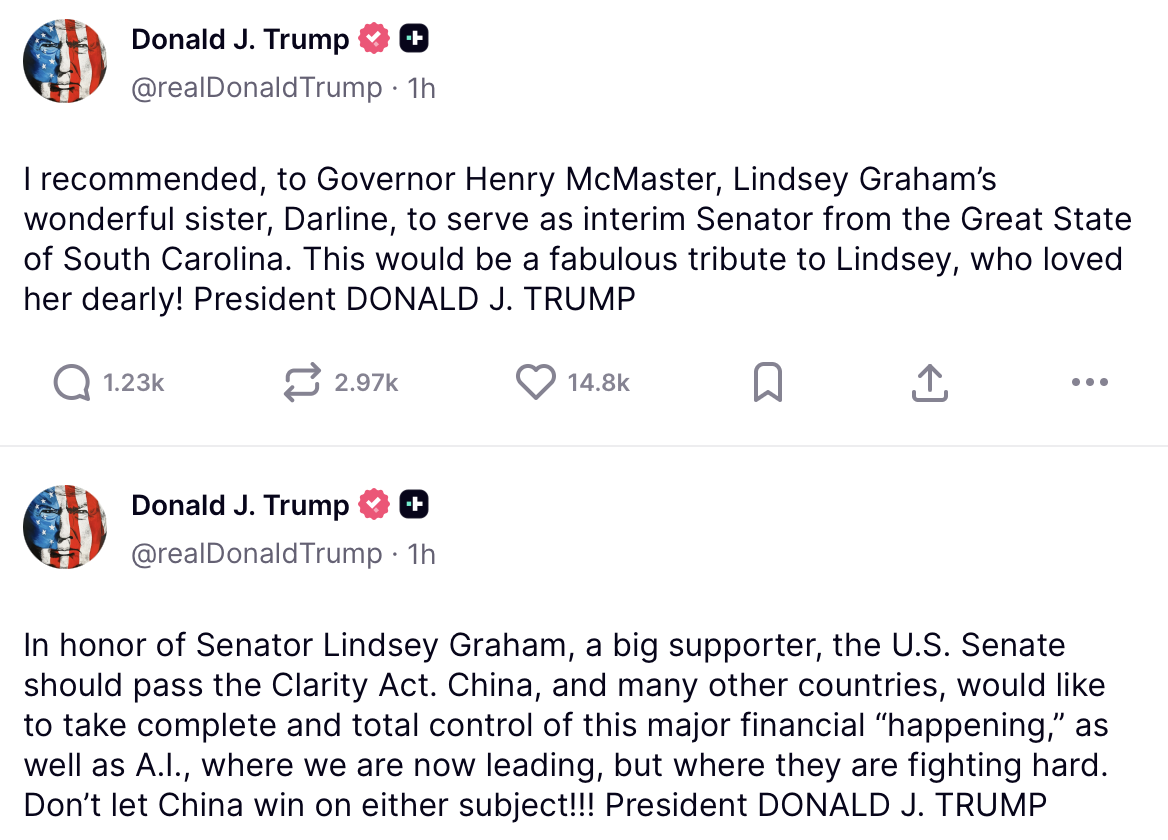
Senator Cynthia Lummis endorsed Trump’s call and said the measure should be sent to his desk. Lummis has argued that a federal framework would give Americans greater confidence and security when participating in the digital economy.
Mike Selig also backed Trump’s argument, writing on X that the United States must lead in AI, crypto, and financial innovation rather than allow outdated laws to put it behind China and other countries. His response adds regulatory support to the political pressure for clearer digital-asset rules, although it does not change the unresolved Senate vote count or the content of the final bill.
White House digital-assets official Patrick Witt separately described the current period as a “critical week” for the bill and pointed to the approaching first anniversary of the GENIUS Act, which established a federal framework for payment stablecoins in July 2025.
Critical week for Clarity, which also happens to be the one-year anniversary of GENIUS. A reminder of the incredible amount of hard work that has gone into this bill, but also of the time we’ve already lost. We cannot afford to delay any longer.
— Patrick Witt (@patrickjwitt) July 13, 2026
The comparison with the GENIUS Act also has limits. Stablecoin legislation dealt primarily with payment-token issuers and reserve requirements. The Clarity Act reaches across token classification, trading markets, decentralized software, regulatory jurisdiction, and political ethics, leaving more issues for lawmakers to reconcile.
The July 17 Hearing Will Not Advance the Senate Text
The House Financial Services Subcommittee on Digital Assets will hold a field hearing in New York on July 17 titled “Building the Future of Finance: How the CLARITY Act Unlocks Innovation.”
The hearing can provide lawmakers with testimony about how the framework may affect exchanges, investors, developers, and financial institutions. It can also maintain public attention on the legislation while Senate negotiations continue.
It is not, however, a Senate markup or floor vote. The immediate procedural work remains in the Senate. The hearing’s practical importance will depend on whether it produces information or political support that helps resolve the disputed provisions.
The Real Progress
Publication of a unified Senate text alone would not guarantee passage. Senate leadership would still need to allocate floor time, negotiators would need to demonstrate sufficient bipartisan support, and senators could propose further amendments.
The August 10 recess is therefore best understood as the strongest remaining legislative window rather than an expiration date. The bill could still move afterward, but the available floor time and political incentives are likely to become less favorable as the midterm campaign intensifies.
For now, the Clarity Act has moved beyond its initial committee stages but has not reached the point where passage can be assumed. The next signal is not another statement supporting the bill; it is a final Senate text accompanied by a credible bipartisan path to a floor vote.
The information provided in this article is for educational purposes only and does not constitute financial, investment, or trading advice.
The post Trump Urges Senate to Pass Clarity Act as August Recess Nears appeared first on Coindoo.
Source: https://coindoo.com/trump-urges-senate-pass-clarity-act/


More Crypto News
Check our Market Overview
Disclaimer: This article is for informational purposes only and does not constitute financial advice. Always conduct your own research (DYOR).