
Key Takeaways A hearing titled “Tokenization and the Future of Securities: Modernizing Our Capital Markets” will be held by the […]
The post Congress Steps In as Tokenization Moves From Wall Street Concept to Policy Priority appeared first on Coindoo.
Key Takeaways
- A hearing titled “Tokenization and the Future of Securities: Modernizing Our Capital Markets” will be held by the House Financial Services Committee on Wednesday at 10 AM ET.
- Nasdaq’s plan to test tokenized versions of a few Russell 1000 stocks and index ETFs through a pilot program has been approved by the SEC.
- The SEC has reiterated that tokenized assets are still classified as securities under federal law; the use of blockchain technology does not change this.
For years, tokenization has been a promising idea that hasn’t been taken seriously in discussions about financial policy. This week, things will be different. The House Financial Services Committee is holding a formal hearing called “Tokenization and the Future of Securities: Modernizing Our Capital Markets” on Wednesday at 10 AM ET. Just days before that hearing was announced, the SEC quietly approved Nasdaq’s plan to run a live tokenization pilot on some US-listed securities.
🚨NEW: The @FinancialCmte is planning to host a hearing on tokenization next Wednesday at 10AM EST.@BlockchainAssn CEO @SummerMersinger is among the scheduled witnesses. pic.twitter.com/3eYJPYD7Is
— Eleanor Terrett (@EleanorTerrett) March 20, 2026
The convergence of legislative attention and regulatory approval in the same week is not something the industry has experienced before, and it signals that tokenization has crossed from concept to policy priority.
The CFTC Already Moved – Congress Is Following
The House hearing does not arrive in isolation. Days earlier, the Commodity Futures Trading Commission issued guidance confirming that Bitcoin, Ethereum, and tokenized assets can serve as collateral in regulated futures and swaps markets – a development that, taken alongside the congressional hearing, suggests the two bodies are moving in deliberate coordination rather than parallel coincidence.
The CFTC’s framework requires strict liquidity standards, proper custody arrangements, and robust risk management protocols, setting a high but navigable bar for institutional participation. What the CFTC did for derivatives collateral, Congress is now examining for the broader securities market. The regulatory apparatus is not reacting to tokenization anymore. It is actively building around it.
A Hearing That Goes Beyond Stablecoins
Washington’s digital asset conversation has been dominated for months by stablecoin legislation, with the GENIUS Act and competing proposals consuming most of the political oxygen in the room. Tokenization has been developing in parallel, attracting serious attention from financial institutions and infrastructure providers, but has received comparatively little formal legislative focus. Wednesday’s hearing changes that dynamic.
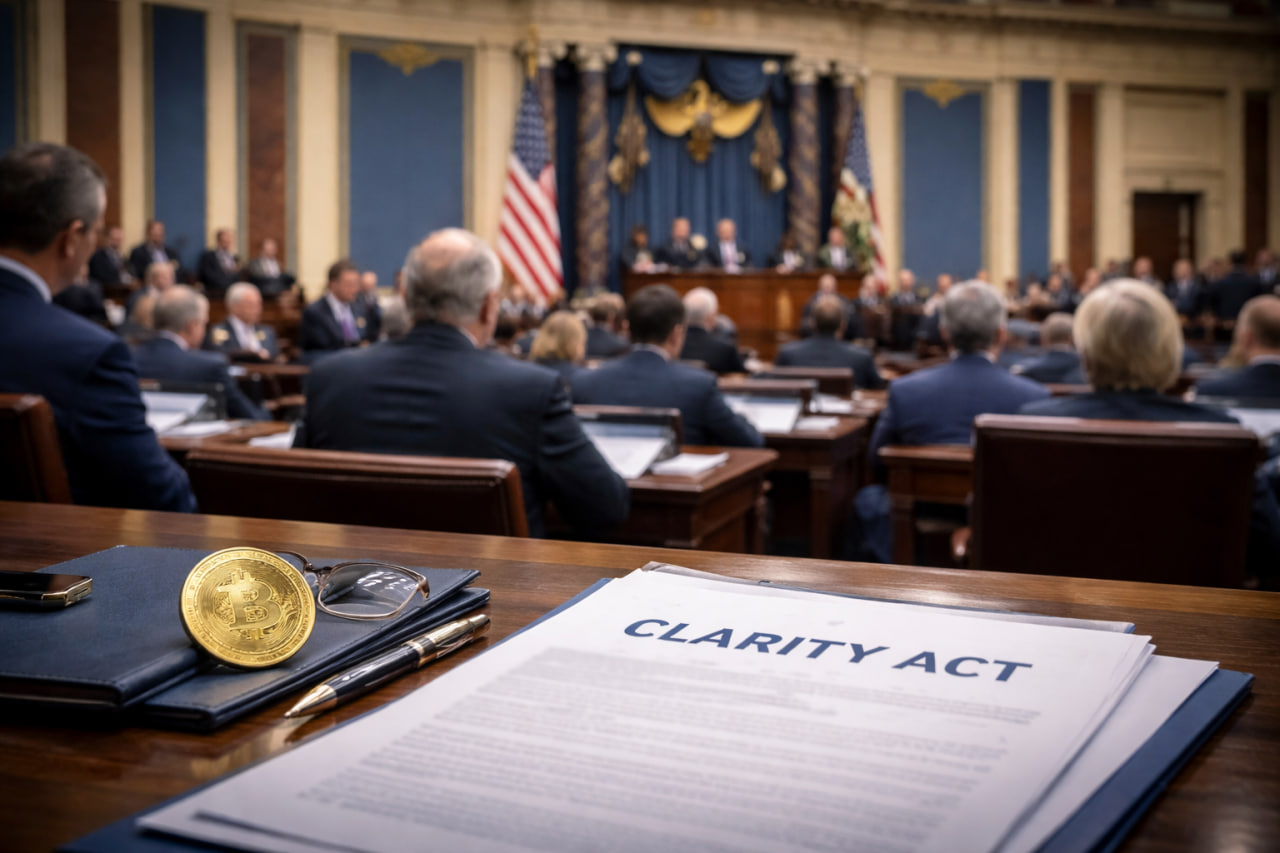
The session will bring together lawmakers and industry representatives to examine how tokenized assets fit within existing regulatory frameworks, what the implications are for capital markets infrastructure, and how policy can be developed without dismantling the investor protections that existing securities law provides. The inclusion of Summer Mersinger, CEO of the Blockchain Association – whose membership includes significant players such as Ripple – places industry stakeholders with direct commercial interests in the outcome at the center of the policy discussion.
The title “Modernizing Our Capital Markets” shows that lawmakers are generally open to integration, rather than seeing tokenization as a disruptive force that needs to be contained. That doesn’t mean that any particular framework will go through easily, but it does mean that the committee’s starting point is more helpful than harmful, which is a big change from how Congress has dealt with digital assets in the past.
Nasdaq’s Pilot: Tokenization Inside the Existing System
Running alongside the congressional hearing is a development that gives the policy discussion concrete grounding. The SEC has approved Nasdaq’s proposal to test tokenized versions of select securities drawn from the Russell 1000 index and associated ETFs. The approval, which followed a proposal Nasdaq submitted in September, represents the first time a major US exchange has received regulatory clearance to operate a live tokenization pilot within the existing market structure.
The design of the approved program is deliberate in its conservatism. Tokenized trades will continue to be processed through the Depository Trust Company, the central clearinghouse that handles the overwhelming majority of US securities settlement. When required, transactions can revert to traditional settlement systems entirely. The architecture is built around integration rather than replacement – tokenization layered onto existing infrastructure rather than substituted for it.
Nasdaq’s Chief Legal Officer John Zecca framed the approval as confirmation that tokenization can function within current US regulatory systems without requiring fundamental changes to how investor protections operate. The exchange drew comparisons to earlier market structure shifts – decimalization and the transition to electronic trading – both of which were initially met with uncertainty before becoming standard features of how markets function.
READ MORE:

2026 Survey Data Confirms What Many Suspected: Institutional Crypto Adoption Is No Longer Optional
The SEC’s position throughout the review process has been consistent and worth noting. Public comments raised concerns around pricing gaps, surveillance challenges, and legal uncertainty – all legitimate questions for a technology being introduced into live markets for the first time at this scale. The regulator acknowledged those concerns while proceeding with approval, a balance that reflects the difficulty of managing innovation within a framework designed before the technology existed.
The Legal Baseline That Frames Everything
One piece of the regulatory picture that both the congressional hearing and the Nasdaq pilot will need to contend with is the SEC’s standing position on the legal status of tokenized assets. The agency has been explicit: tokenization does not change whether an asset is a security. A tokenized share of a Russell 1000 stock is still a share. A tokenized bond is still a bond. Blockchain implementation is a settlement and representation mechanism, not a reclassification tool.
That clarity is, in an important sense, what makes both the hearing and the pilot possible. The industry’s longstanding frustration with digital asset regulation has been the absence of clear rules rather than the presence of restrictive ones. When regulators establish a firm legal baseline – these assets remain securities, these protections remain in place – it creates the stable foundation on which pilot programs can be designed, hearings can be structured, and institutions can make investment decisions.
The week’s developments, taken together, represent the most coherent regulatory moment tokenization has had in the United States. A congressional hearing examining the framework. An exchange pilot testing the mechanics. A regulator that has articulated the legal boundaries clearly enough for both to proceed. What has been a theoretical conversation for years is now being tested in real time – on Capitol Hill and on the trading floor simultaneously.
The information provided in this article is for educational purposes only and does not constitute financial, investment, or trading advice. Coindoo.com does not endorse or recommend any specific investment strategy or cryptocurrency. Always conduct your own research and consult with a licensed financial advisor before making any investment decisions.
The post Congress Steps In as Tokenization Moves From Wall Street Concept to Policy Priority appeared first on Coindoo.
Source: https://coindoo.com/congress-steps-in-as-tokenization-moves-from-wall-street-concept-to-policy-priority/


More Crypto News
Check our Market Overview
Disclaimer: This article is for informational purposes only and does not constitute financial advice. Always conduct your own research (DYOR).