
Key takeaways: AAVE fell from $118 to $90 in 48 hours. $196M bad debt created via KelpDAO rsETH bridge exploit. […]
The post Aave Falls 24% After $196M Bad Debt Exploit Locks ETH Depositors Out appeared first on Coindoo.
Key takeaways:
- AAVE fell from $118 to $90 in 48 hours.
- $196M bad debt created via KelpDAO rsETH bridge exploit.
- ETH pool utilization hit 100%, withdrawals effectively frozen.
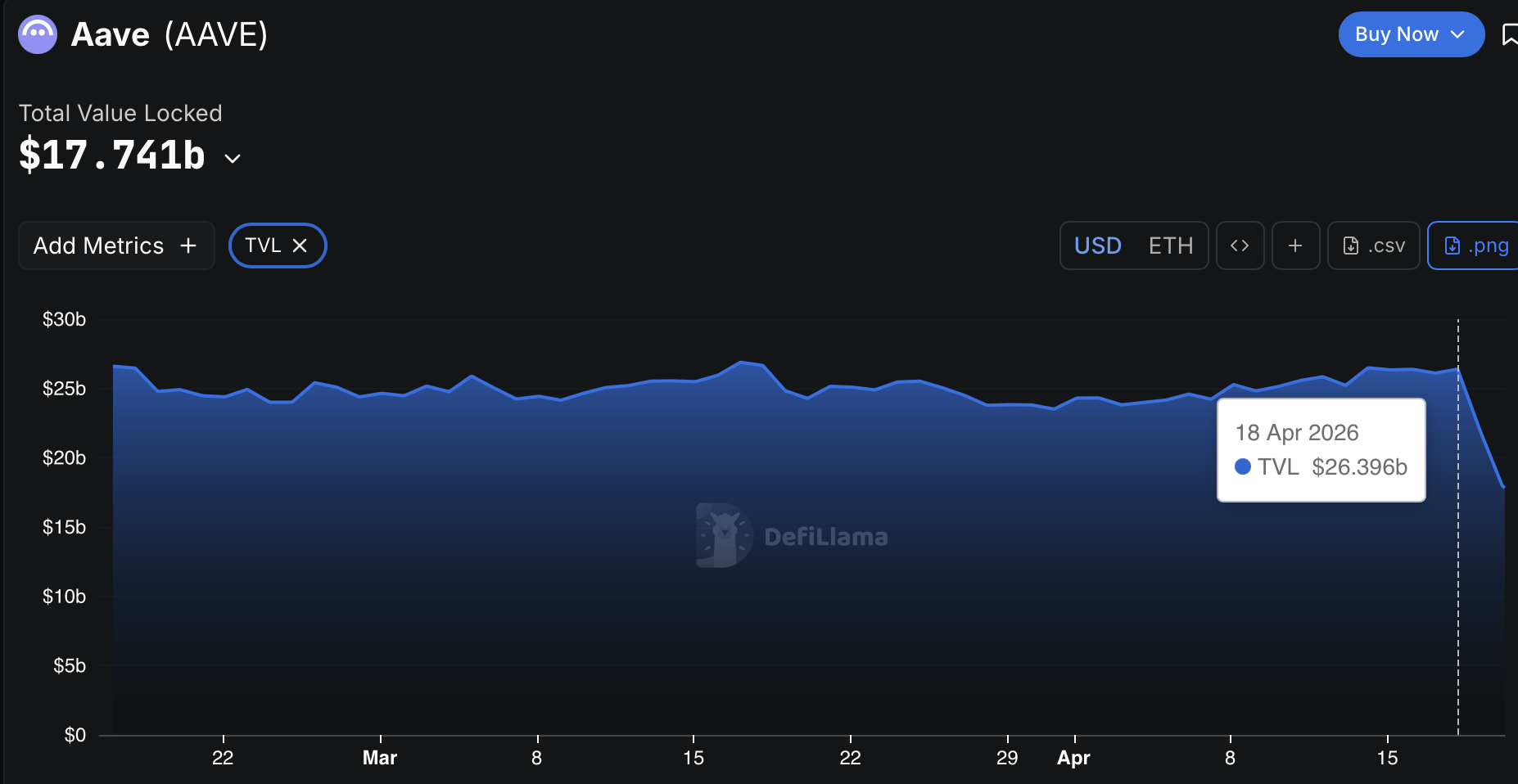
- TVL collapsed more than $8B in two days.
- Three whale wallets sold 60,000 AAVE worth $6M within hours.
- Exchange reserves hit multi-month high at 181.2K AAVE.
- RSI signal crossover on April 20.
- Aave Labs confirms rsETH on Ethereum mainnet remains fully backed.
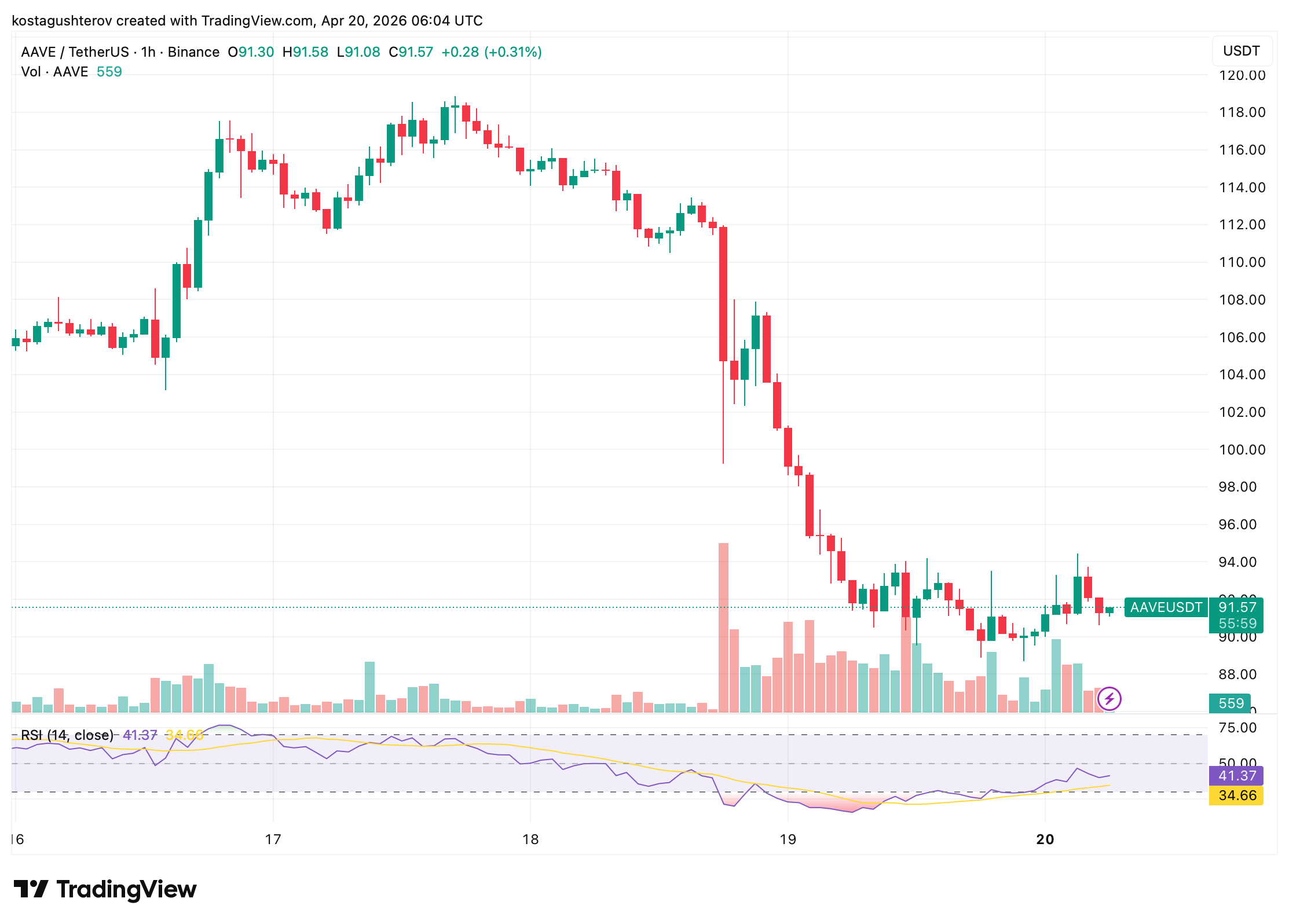
AAVE was trading near $107 on April 16, briefly rallied to $118 on April 17, and then lost nearly a quarter of its value in the two days that followed. The price chart marks the moment precisely. The on-chain data explains why it didn’t stop.


What the exploit actually did to the protocol
Attackers exploited a bridge vulnerability in KelpDAO to drain approximately 116,500 rsETH tokens, valued at around $293 million in 46 minuts. Those tokens were then deposited as collateral on Aave V3, unbacked assets used to borrow hundreds of millions in wrapped ether. The result was nearly $196 million in bad debt sitting inside the protocol with no collateral behind it.
To contain the damage, the Aave Guardian froze rsETH markets and restricted ETH pool withdrawals. That decision, while necessary, created a secondary crisis: ETH pool utilization spiked to 100%, meaning every dollar deposited was already borrowed. Depositors trying to withdraw found themselves locked out. Panic followed the lockout ,not the other way around.
Whales moved first, exchange reserves confirmed it
On-chain data shows three major wallets sold nearly 60,000 AAVE tokens, worth over $6 million, within hours of the news breaking. That kind of concentrated selling from large holders does two things simultaneously: it creates immediate downward price pressure, and it signals to the rest of the market that informed participants are exiting. Retail followed.
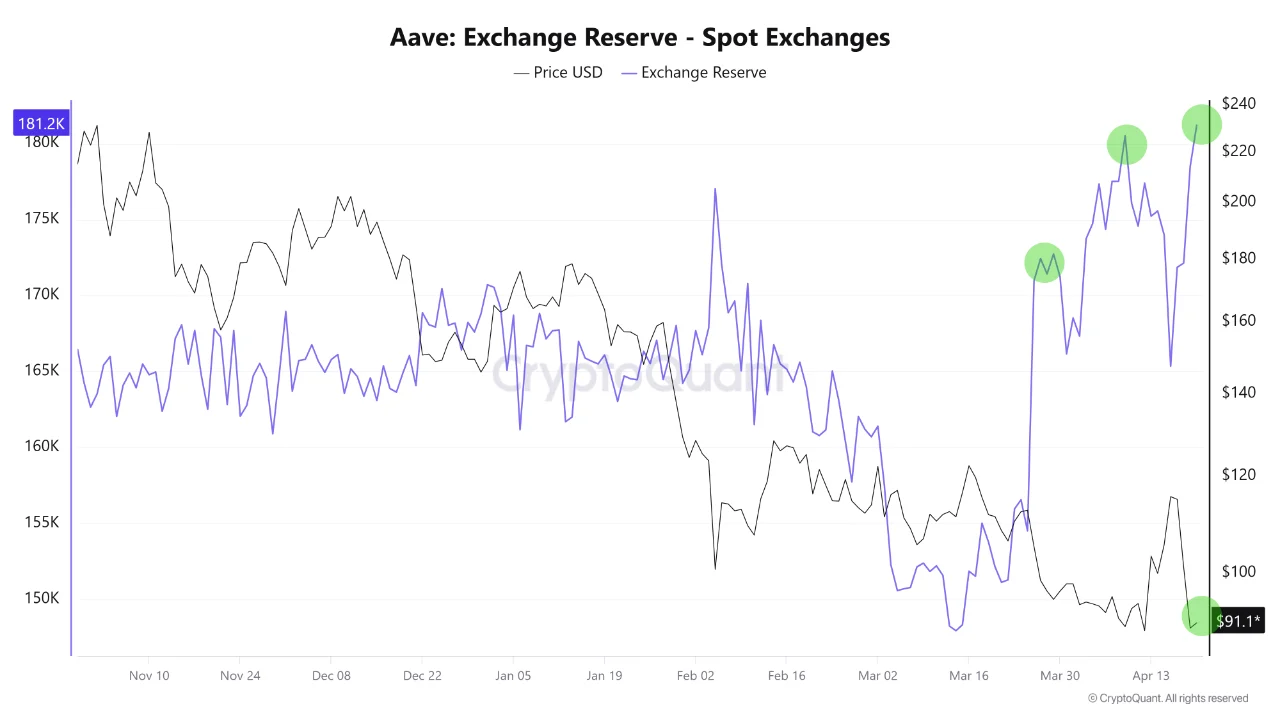
CryptoQuant exchange reserve data makes the scale visible. AAVE reserves on spot exchanges climbed to 181.2K, a multi-month high, as tokens flooded onto trading platforms during the selloff. High exchange reserves matter because they represent potential sell-side supply that hasn’t been sold yet. The panic candle on April 19 cleared some of it. Not all of it.
Where the chart stands now
Price has stabilized around $91 as of April 20, with choppy, low-conviction candles replacing the aggressive red of the previous 48 hours. The 1-hour RSI at 41.37 has crossed above its signal line at 34.66, the first such crossover since the collapse began. That is not a recovery signal. It is an exhaustion signal, selling momentum is decelerating, but that is not the same thing as demand returning.
The distinction matters. With 181.2K AAVE still sitting on exchanges, the path of least resistance is sideways consolidation rather than a sharp bounce. For a genuine recovery, exchange reserves need to start declining, tokens moving back to self-custody, which would indicate holders absorbing supply rather than preparing to sell it.

The protocol question that price hasn’t fully priced yet
Aave Labs confirmed on April 20 that rsETH on the Ethereum mainnet remains fully backed, and markets remain frozen as a precaution rather than as an emergency measure. That distinction matters for long-term credibility, the smart contracts themselves were not breached. But $8 billion in TVL, according to DeFiLlama data, leaving in two days is not a technical event. It is a confidence event, and confidence takes longer to rebuild than liquidity.
The Umbrella reserve, Aave’s built-in backstop mechanism designed to absorb bad debt before it reaches token holders, is now under scrutiny. If it proves sufficient to cover the $196M deficit without slashing staked AAVE holders, the narrative shifts from crisis to stress test survived. If it doesn’t, the $91 floor gets tested again with a different kind of seller, one exiting on fundamentals rather than panic.
Whether the Umbrella reserve absorbs the deficit or forces staker losses, that outcome, not the RSI crossover, is what determines whether $91 holds.
The information provided in this article is for educational purposes only and does not constitute financial, investment, or trading advice. Coindoo.com does not endorse or recommend any specific investment strategy or cryptocurrency. Always conduct your own research and consult with a licensed financial advisor before making any investment decisions.
The post Aave Falls 24% After $196M Bad Debt Exploit Locks ETH Depositors Out appeared first on Coindoo.
Source: https://coindoo.com/aave-falls-24-after-196m-bad-debt-exploit-locks-eth-depositors-out/


More Crypto News
Check our Market Overview
Disclaimer: This article is for informational purposes only and does not constitute financial advice. Always conduct your own research (DYOR).